

When it comes to health and wellness, movement is one of the most effective medicines available. Not only does the act of moving—whether that’s lifting weights, walking the dog or gardening—improve our physical health, but it also boosts mental and emotional health. Bring more of that good stuff into your own space with inspiration from four projects designed with movement in mind.
A Playroom with Momentum
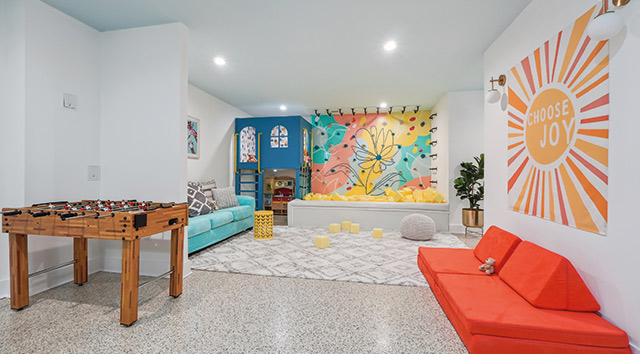
“When children have an exciting and safe place to climb, jump and explore, parents can actually unwind.” That is Reunion House founder Svetlana Kleinhenz’s philosophy when it comes to designing vacation rentals and the reasoning that inspired this brightly-colored indoor playground at one of her properties in Scottdale.
Built with children of all ages in mind, the playroom has something for everyone. Toddlers can enjoy playing on the lower-level play structure and climbing into the foam pit, while older kids can traverse the climbing wall and monkey bars. A brightly-colored mural ties the space together, with plenty of sitting room and clean sight lines for parental supervision.
The Pro: Don’t overlook dynamic force. Climbing structures must be sturdy enough to handle the child’s weight, plus the additional force generated by climbing, jumping and swinging. Use a proper mounting system, like T nuts, which are used by professional climbing gyms. These metal fasteners create threaded sockets in the wood, providing more resistance.
Tips from the Expert
• Check the climbing holds every six months and tighten any that are loose.
• Foam cubes break down over time and need to be replaced every two years.
• Consider using satin finish or washable paint on walls to make cleaning easier.
There’s No Place Like the Home Gym
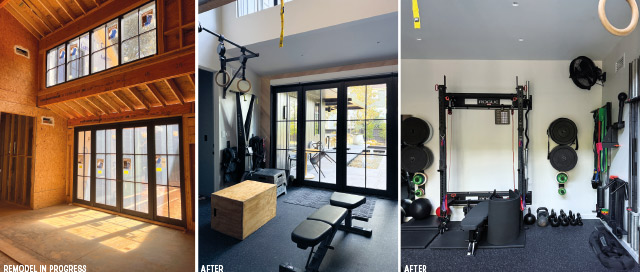
This Oakhurst home gym addition by Alair Homes Decatur may be light and airy, but it’s tougher than it looks. “This space was built as an addition with every intention of handling significant weightlifting and dropping activity,” explains Heather Shuster, Alair Decatur partner.
Ensuring a solid frame and a sound foundation were the project’s top priorities. “We engineered a rigid foundation with a reinforced concrete slab and added 2x6s to the framing for extra support. Blocking as well as plywood panels were added to the walls, which enabled us to safely mount heavy equipment.”
The Pro: Convenience. No more getting dressed and driving to another space. Your workout is just a trip down the hall.
Tips from the Expert
• Add a dehumidifier and fans to combat moisture and humidity.
• Don’t leave damp towels lying around.
Open to the Possibilities
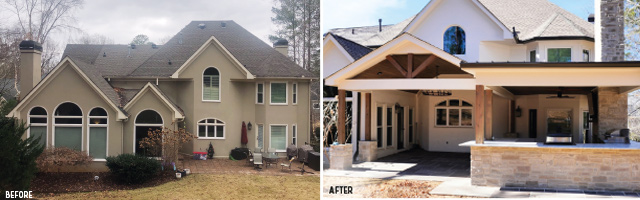
Spaces don’t have to be designed for a specific activity; sometimes just the option to move is enough, like with this open outdoor living design by EXOVATIONS.
“More and more we’re seeing homeowners who want freedom, flow and function in their outdoor living spaces,” says Candice Skinner, EXOVATIONS’ business development director.
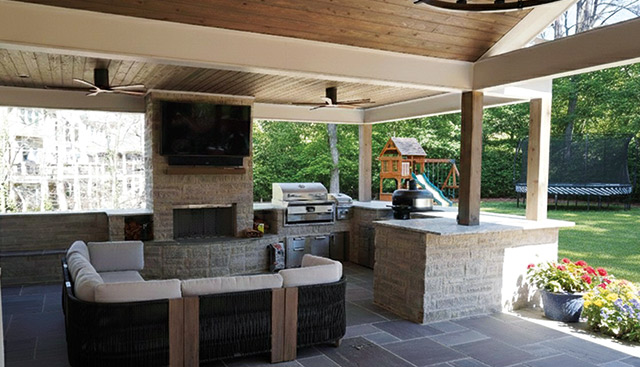
For this Roswell build, the designers went out instead of up to maximize the entertainment space. A gorgeous fireplace of natural Indiana split-face stone and a top-of-the-line kitchen sit beneath the cedar tongue-in-groove ceiling, while open walls give easy access to the surrounding yard for games or gatherings.
The Pro: Unrestricted by walls and railings, homeowners can reconfigure the space to fit their changing needs.
Tips from the Expert
“The most important thing to know is which sport you plan on playing the most, as this affects which tile line is best supported. Sports like basketball use tiles with a bit more cushion and shock absorption to mimic a suspended hardwood court, but this makes them less ideal for tennis or pickleball, where play relies heavily on solid contact and bounce.”