



By this time of the year, hints of warm weather start to lure folks out of hibernation. For gardeners, it’s extra exciting because edible gardens are in full swing! What we planted in the fall reveals its destiny—we’re either
having colorful hand-grown salads and bright grilled veggies, or we’re kicking the dirt, wondering what to change for next season. In the middle of those outcomes, it’s time to start brainstorming what we’ll plant for summer harvest right now.
Prep The Garden
Once you decide what crops you’ll grow, it’s always a good idea to prep the soil. Good, fertile soil is key for strong, healthy plants. Always choose an area that receives full sun and has good drainage. Add organic matter, like compost, to the soil before planting, then follow directions on the seed packet for depth, spacing and water requirements. Always water gently to avoid washing away seeds, and pack the soil to secure its place.
Mulching around the roots with cypress mulch, bark or pine/wheat straw does wonders, no matter what season you’re planting for. Mulch serves three purposes: weed suppression, soil moisture retention and root protection. And if a freeze looms, employ a row cover, bedsheet, blanket or tarp overnight.
 Warm Season Crops
 Warm Season Crops
When to Plant: After the last frost, typically late March to mid-April
Here’s where novice gardeners should try their hand! The list is huge for what you can plant. Think pizza toppings, veggies to pickle, fresh salads and crudite dipped in your favorite dressing. Colorful, aromatic garnishes and some of our favorite Southern side dishes come out of these gardens.
Planting: The date of the season’s last frost is crucial in deciding when to plant warm-season crops, like tomatoes, peppers, beans, melons and squash. UGA’s College of Agriculture and Environmental Sciences tracks and records these dates at different weather stations around the state. Check georgiaweather.net to see when the last frost was in your area. Once that happens, it’s off to the races to plant. Direct sow seeds for crops like beans and cucumbers, and use transplanted seedlings for tomatoes and peppers.
Maintenance: During the summer, watch out for common pests such as tomato hornworms, squash vine borers and stink bugs, among many others. While controlling pests is key to keeping plants attractive, diseases can also impact both the leaves and the fruit. Scout your garden daily to catch and manage any damage.
Not only is it fun to watch peppers and tomatoes grow, but there also isn’t much guesswork involved in when to harvest them—when they look ready, they are ready! Just wash and enjoy.
Cool Season Crops
When to Plant: August through March
Cool season crops include earthy kale and carrots for hearty soups and braised cabbages or roasted broccoli to complement winter dinners. It’s a rich family of health-forward foods that are easier to grow than you think! Leafy crops like broccoli, cabbage, collards and kale are tough in cold weather, and—lucky for us that live in unpredictable Georgia weather—they often become even sweeter with a frost.
Planting: Plant direct-sow seeds for root vegetables, but opt for transplants for broccoli, kale and cabbage (you’ll get a head start, if you don’t mind a little garden humor). Pro tip: For root crops, loosen the soil 10-12 inches deep to make it easy for roots to grow downward.
Typically, each vegetable can be planted two or even three times in a season. That way there’s a constant harvest. The first planting of cool-season crops is usually made in late summer, like August. The plant has time to grow and establish in the warmer months, then it produces by the time the cooler weather arrives!
Maintenance: Once your cool-season crops are in the ground, it’s important to mulch to keep the roots cool as days slowly get warmer. Fertilization is key, too, because these guys are heavy feeders. Growth needs to happen fast before it gets too warm, so applying a nitrogen-rich fertilizer the second or third week after they’re planted is recommended.
Some of these greens can be a little tedious. Broccoli, especially, is a bit of a drama queen prone to a process called bolting. Bolting—when a plant flowers or grows quickly, diverting nutrients away from edible parts—results in a yellow, bitter or tasteless harvest. Bolting often happens as days get longer and soil temperature rises. Stave off bolting by planting at the right time, checking on your plants regularly and reducing stress by mulching and watering.
Pests are also a pain for this group. Plan to scout almost every day for worms or loopers (little green caterpillars). Bacillus Thuringiensis (Bt) is a natural insecticide that is very effective when ingested by these little guys. Good spray coverage is important, and because Bt rapidly breaks down in the sun, multiple applications are necessary. If the damage isn’t too severe, these pests can also just be plucked off the plant. Talk about getting your hands dirty.
Put it in a Pot
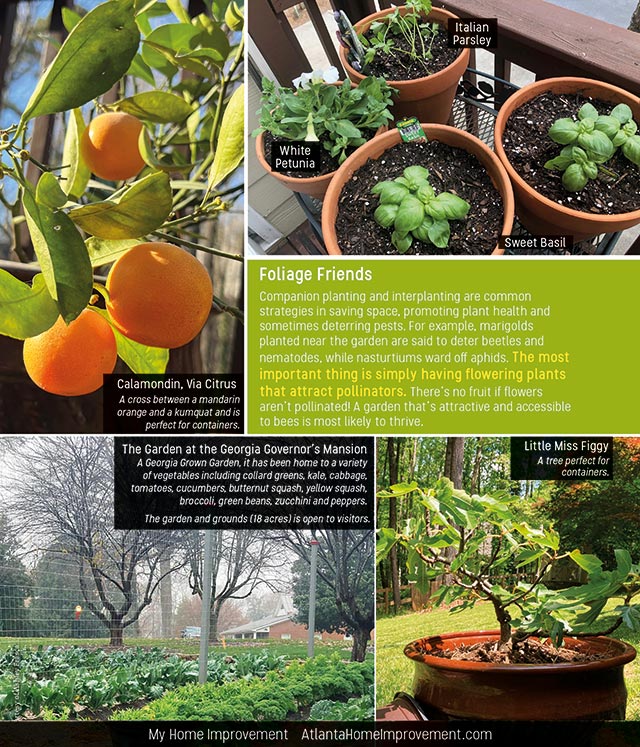
Don’t have a great space to spread out your garden? No worries. Most vegetables can also be grown in containers, as well as herbs, like cilantro, and fruits, like blueberries, figs and citrus. Containers are often easier to look after and harvest from, and there’s greater control over the conditions, keeping pests and diseases to a minimum.
Sun exposure, well-draining soil and the depth of the container are all important for sufficient root and foliage growth. Containers can vary from pots and hanging baskets to grow bags and garden towers! Just ensure there’s plenty of room, great light and a way for water to drain.
Happy planting, readers. I can’t wait to see what you dig (and cook) up!
Companion Planting Tips for Georgia
Companion planting and interplanting are common strategies in saving space, promoting plant health and sometimes deterring pests. For example, marigolds planted near the garden are said to deter beetles and nematodes, while nasturtiums ward off aphids. The most important thing is simply having flowering plants that attract pollinators. There’s no fruit if flowers aren’t pollinated! A garden that’s attractive and accessible to bees is most likely to thrive.